Project index
Verified liveOpen-source ReferenceOpen source

Next.js Commerce 

An open-source headless commerce reference for server rendering, product discovery, cache invalidation, cart state, and Shopify checkout.

Architecture knowledge graph14 connected nodes
System coreNext.js CommerceOpen-source Reference
01 / RequestApp Router resolves catalog intent on the server
02 / QueryA provider adapter owns commerce access
03 / RenderServer components stream the visual catalog
04 / CacheTags separate stable catalog data from change events
05 / MutateCart operations stay on the server boundary
06 / CheckoutPayment crosses into the commerce provider
Next.js
React Server Components
Server Actions
Shopify
GraphQL
Tailwind CSS
Vercel
Architecture stage Technology dependencyMove pointer to inspect depth

System brief

A server-first storefront architecture for headless commerce

Engineering focus
Architecture review and local storefront evaluation
Domain
Open-source Reference
Delivery window
Open source
System state
Verified live
OSSupstream project reference
RSCserver-first rendering model
1headless provider boundary

The engineering move

Complex behavior, made operational.

Constraint

The product problem

A headless storefront must keep product pages fast and cacheable while prices, availability, carts, and checkout remain dynamic. The architecture also needs a clean provider boundary so commerce data does not leak through every UI component.

System

The architecture decision

App Router server components fetch catalog data through a Shopify adapter, streaming and suspense shape delivery, and cache tags isolate revalidation. Server Actions mutate cart state while checkout transfers to Shopify's hosted boundary.

Outcome

The operating result

The reference demonstrates how server-first rendering and explicit commerce adapters can reduce client JavaScript without giving up search, cart, metadata, dynamic OG images, or transactional state. It is not presented as original authorship.
Delivered capability

What the system actually does.

01

Server-rendered catalog, collections, search, and products

02

Shopify Storefront GraphQL adapter

03

React Server Components and suspense streaming

04

Tag-based caching and webhook revalidation

05

Server Action cart mutations

06

SEO metadata, sitemap, robots, and dynamic OG images

07

Hosted Shopify checkout handoff

08

Vercel deployment and environment integration

Full system flow

The Mermaid diagram, rendered.

The interactive graph above is the executive view. This is the detailed service, data, control, and delivery path reviewed from source.
Mermaid / system architecture120%

Rendering the reviewed system flow

Production architecture

A concrete path through the system.

Each stage below comes from the reviewed source tree, routes, services, infrastructure, and deployment evidence.
  1. 01
    Request

    App Router resolves catalog intent on the server

    Routes and search parameters determine collection, product, search, or cart work before the component tree is rendered.

    Next.jsApp RouterRSC
  2. 02
    Query

    A provider adapter owns commerce access

    Shopify GraphQL queries and fragments translate storefront data into stable application shapes.

    ShopifyGraphQLFragments
  3. 03
    Render

    Server components stream the visual catalog

    Suspense boundaries and server rendering deliver useful HTML while slower commerce fragments resolve independently.

    React Server ComponentsSuspenseStreaming
  4. 04
    Cache

    Tags separate stable catalog data from change events

    Fetch caching and revalidation tags make pages fast while Shopify webhooks invalidate the affected product and collection views.

    Cache tagsWebhooksRevalidation
  5. 05
    Mutate

    Cart operations stay on the server boundary

    Server Actions create, update, and remove cart lines while cookies retain the active cart identity.

    Server ActionsCookiesCart API
  6. 06
    Checkout

    Payment crosses into the commerce provider

    The application preserves discovery and cart experience, then delegates the transaction to Shopify's hosted checkout.

    Shopify CheckoutRedirectVercel

Engineering judgment

The decisions behind the delivery.

The provider boundary is deliberate

Commerce-specific queries and response mapping stay in one adapter instead of spreading across UI components.

Caching follows business events

Products and collections are invalidated by provider events rather than a blanket time-to-live.

Attribution stays explicit

This item documents an upstream open-source system reviewed locally and does not claim original authorship.

Technical constellation

01Next.js02React Server Components03Server Actions04Shopify05GraphQL06Tailwind CSS07Vercel
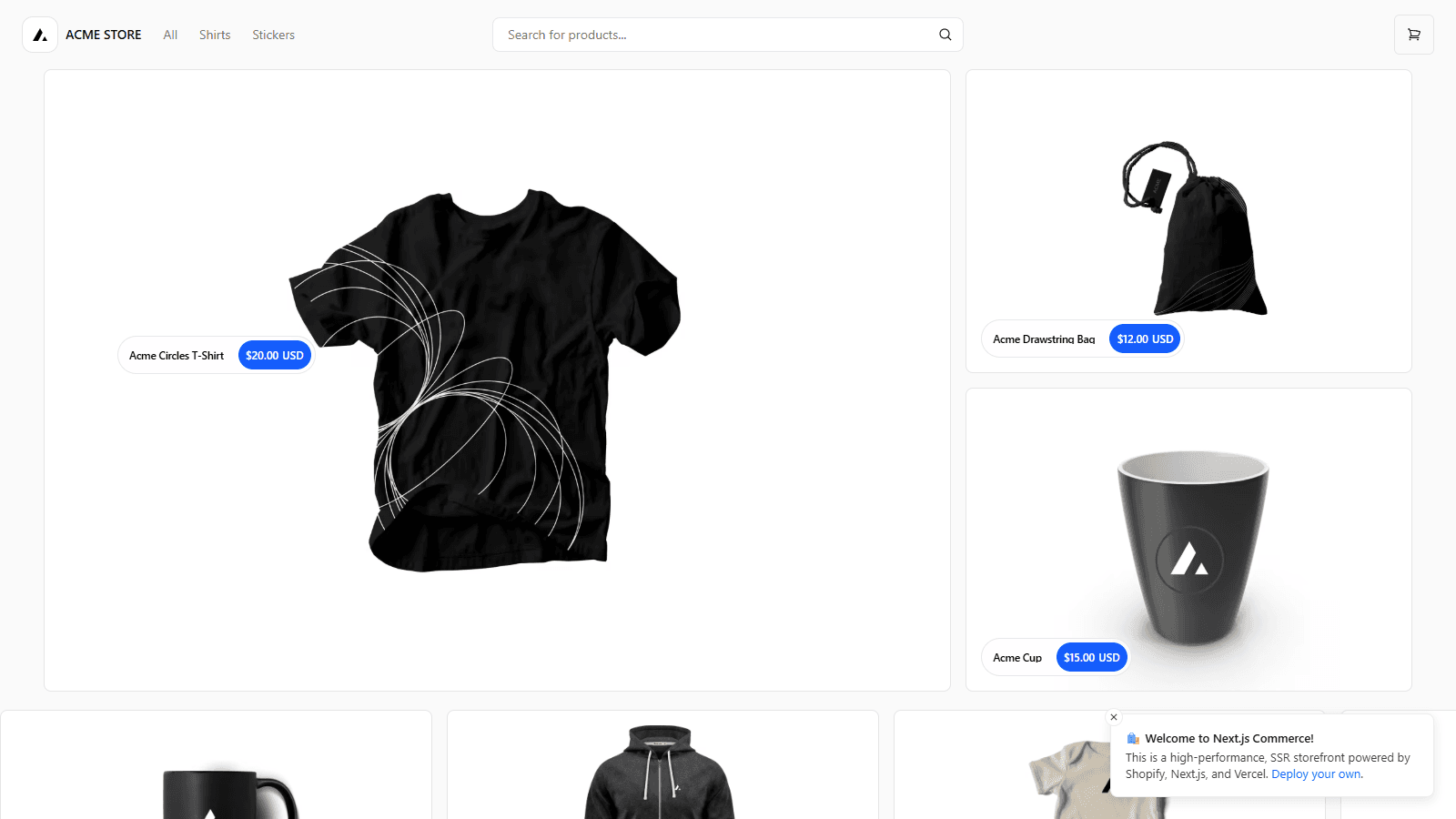
Next.js Commerce public demo storefront
Deployment evidence

This is running software.

Public upstream demo and nested source repository reviewed on 2026-07-16; no personal authorship claim. The public link is provided as evidence, while protected product areas correctly remain behind authentication.

Open Next.js Commerce

Continue through the project archive

Next caseWyz.ai