Project index
Source reviewedAutomation SystemSource archive

Webhook 

A Node.js webhook service for receiving and processing WhatsApp-related events.

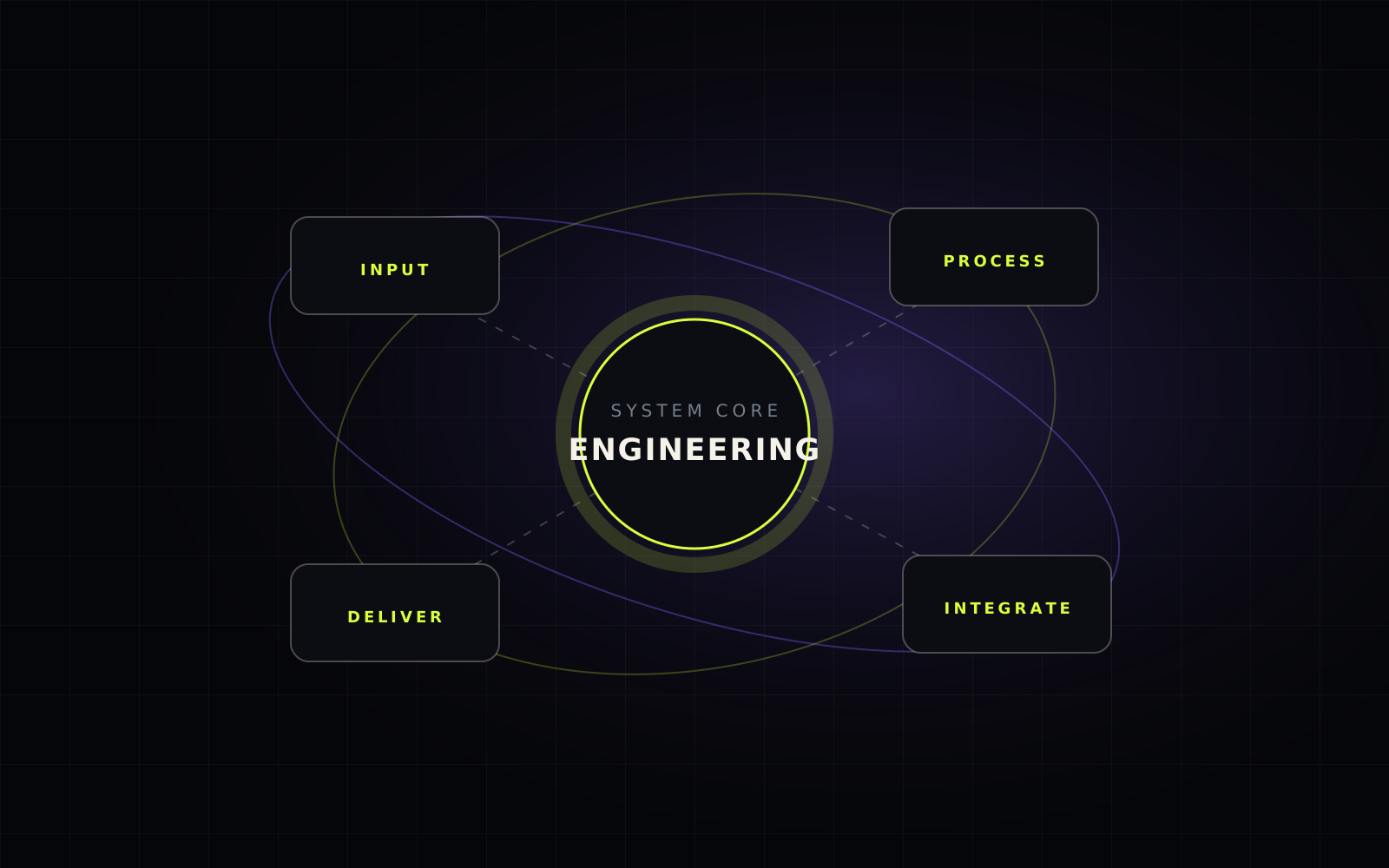
Architecture knowledge graph07 connected nodes
System coreWebhookAutomation System
01 / InputTrigger / Event Payload
02 / ProcessRules, Scheduling & Automation
03 / IntegrateConnected Platform APIs
04 / DeliverAutomated Action / Status
Express
Node.js
Architecture stage Technology dependencyMove pointer to inspect depth

System brief

Automation System / reviewed system architecture

Engineering focus
Product and systems engineering
Domain
Automation System
Delivery window
Source archive
System state
Source reviewed
1source repositories indexed
1application packages detected
2core technologies mapped

The engineering move

Complex behavior, made operational.

Constraint

The product problem

A Node.js webhook service for receiving and processing WhatsApp-related events. The engineering challenge is to turn that scope into a legible system with explicit inputs, dependable workflow boundaries, and an outcome that can be inspected and maintained.

System

The architecture decision

The reviewed implementation routes trigger / event payload through rules, scheduling & automation, crosses connected platform apis where required, and produces automated action / status.

Outcome

The operating result

Webhook is included as documented engineering work. Its source structure, technology stack, and functional flow are presented here even though no verified public deployment is currently available.
Delivered capability

What the system actually does.

01

Trigger / Event Payload intake and validation

02

Rules, Scheduling & Automation execution

03

Connected Platform APIs integration boundary

04

Automated Action / Status delivery

05

Repeatable automation and recovery paths

06

External service and API coordination

Full system flow

The Mermaid diagram, rendered.

The interactive graph above is the executive view. This is the detailed service, data, control, and delivery path reviewed from source.
Mermaid / system architecture120%

Rendering the reviewed system flow

Production architecture

A concrete path through the system.

Each stage below comes from the reviewed source tree, routes, services, infrastructure, and deployment evidence.
  1. 01
    Input

    Trigger / Event Payload

    The workflow begins with a defined user, event, document, media, or service input and establishes the state required for processing.

    ExpressNode.js
  2. 02
    Process

    Rules, Scheduling & Automation

    Domain logic coordinates the central transformation, reasoning, automation, or product workflow behind the project.

    ExpressNode.js
  3. 03
    Integrate

    Connected Platform APIs

    External APIs, model providers, storage, platform services, or host applications are kept behind an explicit integration boundary.

    ExpressNode.js
  4. 04
    Deliver

    Automated Action / Status

    The system returns an actionable product result, structured dataset, automated operation, or user-facing response.

    ExpressNode.js

Engineering judgment

The decisions behind the delivery.

The source remains the evidence

Descriptions and architecture are grounded in the indexed repository structure, package metadata, and reviewed functional flow.

Boundaries stay explicit

Inputs, core workflow, integrations, and outcomes are separated so the system can be understood without relying on a public demo.

Deployment status is honest

No live action is displayed because a public deployment could not be verified.

Technical constellation

01Express02Node.js
Webhook system architecture cover
Source evidence

The system is documented.

Source tree and architecture inventory reviewed on 2026-07-16; no public deployment verified. Its reviewed architecture and functional flow remain available without presenting an unverified public deployment.

Continue through the project archive

Next caseWhatsApp Backup Downloader