Project index
Verified liveOpen-source ReferenceOpen source

AutoGPT Platform 

An open-source systems reference covering graph-based agent composition, isolated execution, credentials, persistence, and marketplace distribution.

Architecture knowledge graph16 connected nodes
System coreAutoGPT PlatformOpen-source Reference
01 / ComposeUsers assemble a typed agent graph
02 / ValidateGraph contracts are checked before execution
03 / DispatchThe API converts a graph version into a run
04 / ExecuteWorkers traverse blocks and emit state
05 / PersistPlatform state and fast coordination stay separate
06 / DistributeCompleted agents can move into a marketplace
Next.js
React Flow
Python
FastAPI
Prisma
PostgreSQL
Redis
Supabase
Docker
Architecture stage Technology dependencyMove pointer to inspect depth

System brief

An open-source reference architecture for composable AI agents

Engineering focus
Architecture review and local platform evaluation
Domain
Open-source Reference
Delivery window
Open source
System state
Verified live
OSSupstream project reference
3core platform planes
1visual agent graph model

The engineering move

Complex behavior, made operational.

Constraint

The product problem

General-purpose agents need more than a prompt loop. A useful platform must compose reusable blocks, hold credentials safely, schedule and isolate executions, stream state back to users, persist graph versions, and make agents discoverable.

System

The architecture decision

The reviewed platform separates the Next.js graph builder, backend APIs, execution workers, database and authentication services, and marketplace. Agent graphs are stored as versioned structures and dispatched into an execution plane that resolves block dependencies and emits progress.

Outcome

The operating result

The codebase is a strong reference for the boundaries required by a general agent platform: authoring, execution, state, credentials, observability, and distribution. It is included as a transparent open-source study, not as a personal authorship claim.
Delivered capability

What the system actually does.

01

Visual graph construction for reusable agent workflows

02

Block registry for models, tools, data, and integrations

03

Versioned agent definitions and execution state

04

Credential and secret management boundaries

05

Background execution with progress and result events

06

PostgreSQL and Redis-backed platform services

07

Agent marketplace and discovery surface

08

Docker Compose development and deployment topology

Full system flow

The Mermaid diagram, rendered.

The interactive graph above is the executive view. This is the detailed service, data, control, and delivery path reviewed from source.
Mermaid / system architecture120%

Rendering the reviewed system flow

Production architecture

A concrete path through the system.

Each stage below comes from the reviewed source tree, routes, services, infrastructure, and deployment evidence.
  1. 01
    Compose

    Users assemble a typed agent graph

    The Next.js interface and React Flow represent nodes, connections, settings, and reusable templates as a visual program.

    Next.jsReact FlowTypeScript
  2. 02
    Validate

    Graph contracts are checked before execution

    Block definitions and connection rules establish the inputs, outputs, credentials, and dependency order needed by a run.

    Block registrySchemasGraph validation
  3. 03
    Dispatch

    The API converts a graph version into a run

    Authenticated requests resolve the selected agent, execution context, secrets, and schedule before work reaches the execution plane.

    FastAPIAuthScheduling
  4. 04
    Execute

    Workers traverse blocks and emit state

    Independent executors run model, tool, data, and integration blocks while preserving node outputs and failure context.

    PythonWorkersEvents
  5. 05
    Persist

    Platform state and fast coordination stay separate

    PostgreSQL and Prisma retain durable entities while Redis supports coordination and transient execution concerns.

    PostgreSQLPrismaRedis
  6. 06
    Distribute

    Completed agents can move into a marketplace

    The market surface packages metadata, versions, ownership, and discovery around reusable agent definitions.

    MarketplaceSupabaseDocker

Engineering judgment

The decisions behind the delivery.

Graphs are product contracts

A visual builder becomes reliable only when nodes expose typed boundaries and persisted versions.

Execution needs its own plane

Long-running agent work should not share lifecycle and failure behavior with the interactive web request.

Attribution stays explicit

This item documents an upstream open-source system reviewed locally and does not claim original authorship.

Technical constellation

01Next.js02React Flow03Python04FastAPI05Prisma06PostgreSQL07Redis08Supabase09Docker
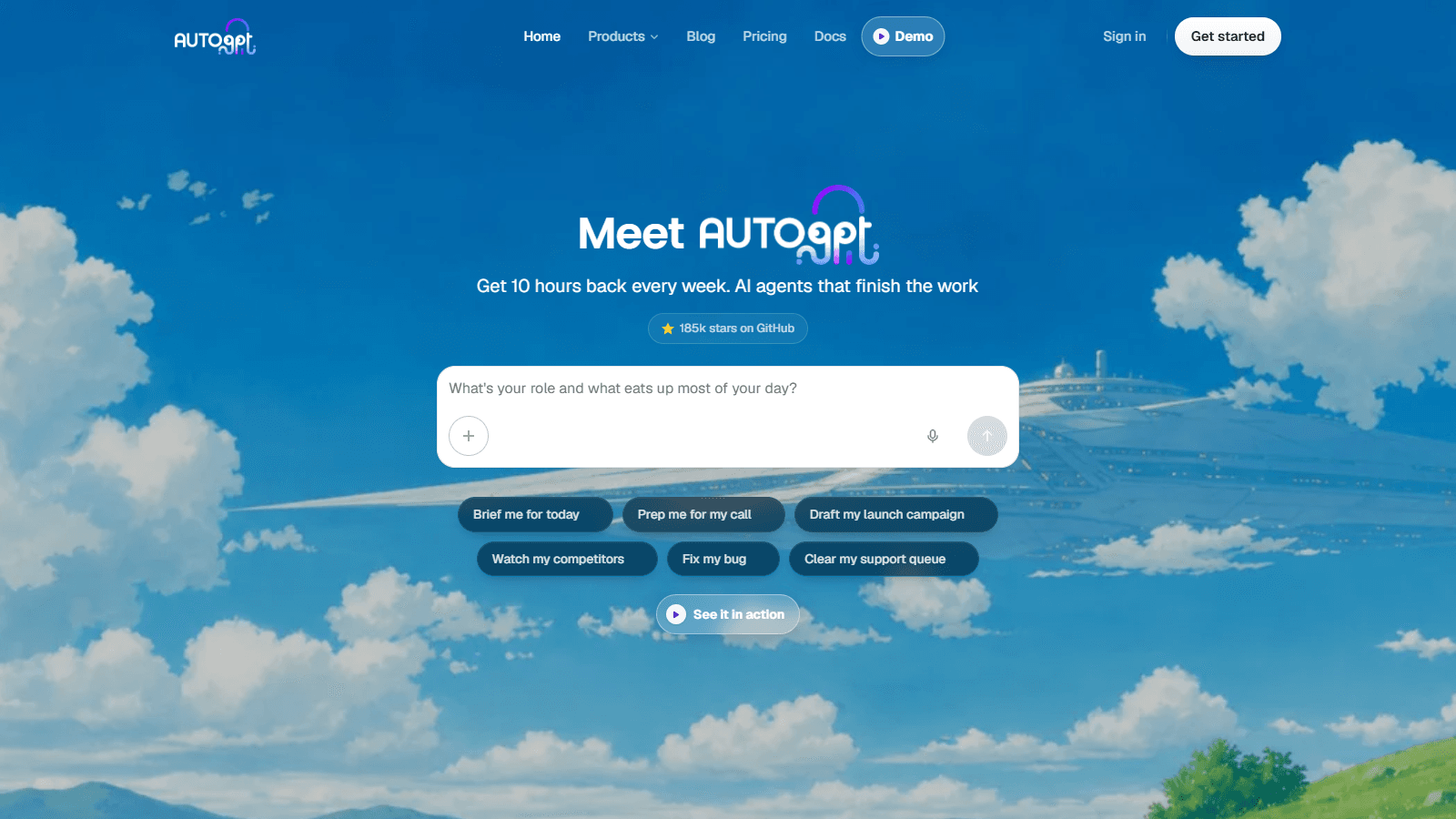
AutoGPT public product homepage
Deployment evidence

This is running software.

Public upstream product and local source copy reviewed on 2026-07-16; no personal authorship claim. The public link is provided as evidence, while protected product areas correctly remain behind authentication.

Open AutoGPT Platform

Continue through the project archive

Next caseHomepage