Project index
Verified liveOpen-source ReferenceOpen source

Homepage 

An open-source reference for configuration-driven dashboards, service discovery, proxied integrations, localization, and container delivery.

Architecture knowledge graph14 connected nodes
System coreHomepageOpen-source Reference
01 / DeclareConfiguration describes the dashboard
02 / DiscoverDocker metadata can add running services
03 / RenderNext.js converts configuration into a responsive surface
04 / ProxyExternal service calls stay behind the server
05 / ObserveWidgets expose service state without coupling
06 / ShipStatic assets and containers support simple operations
Next.js
React
Tailwind CSS
YAML
Docker
Service APIs
i18next
Architecture stage Technology dependencyMove pointer to inspect depth

System brief

A declarative service dashboard for self-hosted infrastructure

Engineering focus
Architecture review and local deployment evaluation
Domain
Open-source Reference
Delivery window
Open source
System state
Verified live
OSSupstream project reference
100+documented service integrations
1declarative configuration model

The engineering move

Complex behavior, made operational.

Constraint

The product problem

A self-hosted homepage has to unify many unrelated services without exposing credentials to the browser or forcing users to build a custom dashboard. It also needs fast static delivery, Docker discovery, localization, and fault isolation when widgets fail.

System

The architecture decision

YAML configuration defines groups, services, bookmarks, widgets, and layout. Next.js renders the experience while server-side proxy routes protect integration credentials and normalize external APIs. Docker discovery can supplement or generate service definitions.

Outcome

The operating result

The project demonstrates a clean configuration-to-interface pipeline and a practical pattern for safely aggregating heterogeneous infrastructure. It is included as a reviewed upstream reference with explicit attribution.
Delivered capability

What the system actually does.

01

YAML-driven services, bookmarks, widgets, and layout

02

Server-side proxy boundary for third-party credentials

03

Broad service-widget adapter ecosystem

04

Docker socket and label-based service discovery

05

Search, localization, theming, and custom styling

06

Static-first Next.js application delivery

07

Health and status presentation across services

08

Container images and documented deployment paths

Full system flow

The Mermaid diagram, rendered.

The interactive graph above is the executive view. This is the detailed service, data, control, and delivery path reviewed from source.
Mermaid / system architecture120%

Rendering the reviewed system flow

Production architecture

A concrete path through the system.

Each stage below comes from the reviewed source tree, routes, services, infrastructure, and deployment evidence.
  1. 01
    Declare

    Configuration describes the dashboard

    YAML files define content, grouping, visual layout, providers, and service-specific widget settings.

    YAMLSchemasConfiguration
  2. 02
    Discover

    Docker metadata can add running services

    Socket and label integrations translate container metadata into dashboard entries without duplicating operational state.

    DockerLabelsDiscovery
  3. 03
    Render

    Next.js converts configuration into a responsive surface

    Server and client components compose groups, bookmarks, service cards, search, themes, and localized presentation.

    Next.jsReactTailwind CSS
  4. 04
    Proxy

    External service calls stay behind the server

    Integration adapters keep tokens away from the browser and normalize service-specific requests and response shapes.

    API proxyAdaptersSecrets
  5. 05
    Observe

    Widgets expose service state without coupling

    Each widget owns its endpoint mapping and failure state so a degraded provider does not collapse the full homepage.

    WidgetsStatusError isolation
  6. 06
    Ship

    Static assets and containers support simple operations

    A container-first path and documented configuration volumes make the same dashboard portable across home labs and servers.

    DockerVolumesCI

Engineering judgment

The decisions behind the delivery.

Configuration is the interface

The application remains broadly useful because users extend data instead of forking component code.

Proxying protects integration secrets

Service credentials remain server-side even though the resulting status is visible in the browser.

Attribution stays explicit

This item documents an upstream open-source system reviewed locally and does not claim original authorship.

Technical constellation

01Next.js02React03Tailwind CSS04YAML05Docker06Service APIs07i18next
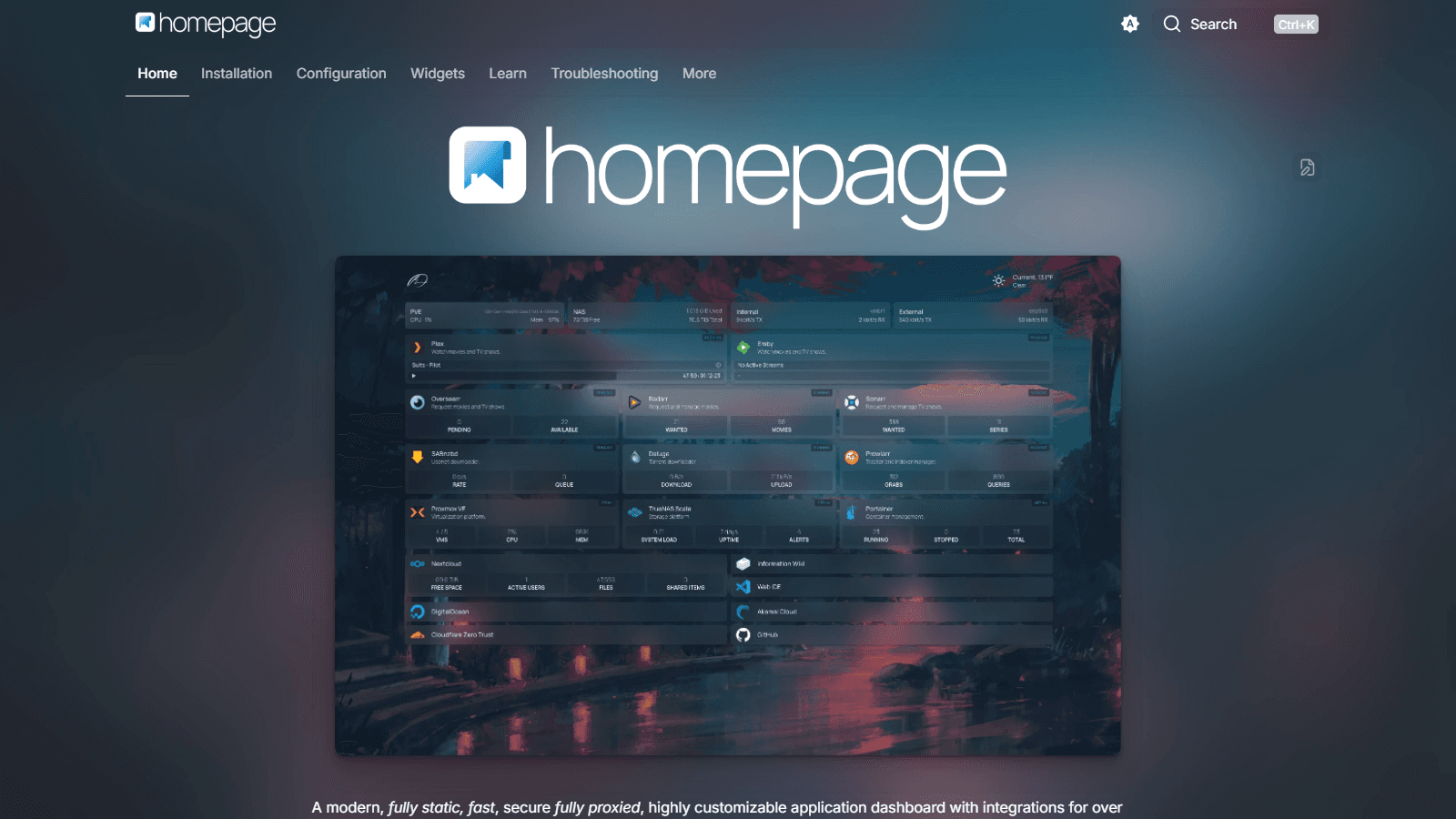
Homepage open-source project documentation site
Deployment evidence

This is running software.

Public upstream product and nested source repository reviewed on 2026-07-16; no personal authorship claim. The public link is provided as evidence, while protected product areas correctly remain behind authentication.

Open Homepage

Continue through the project archive

Next caseNext.js Commerce